- Asia Pacific News
- Energy Savings
- Europe News
- Industrial Solutions
- Municipal Solutions
- North America News
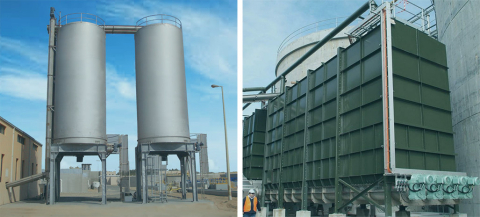
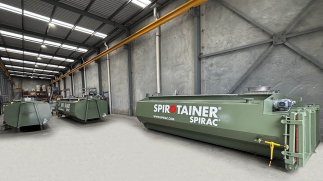
At SPIRAC, environmental responsibility informs every engineering decision. Our Sliding‑Frame and Live‑Bottom silo systems are purpose‑built for dependable sludge flow in wastewater and industrial settings—balancing reliability, service life, and energy performance.
Storage Options Overview
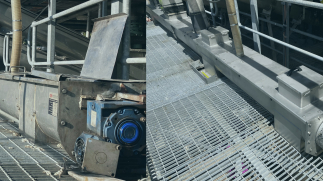
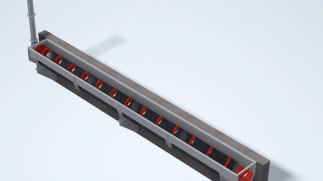
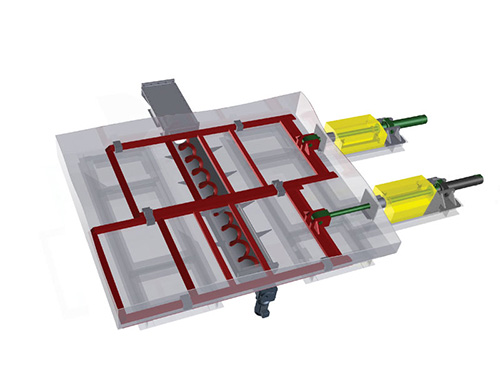
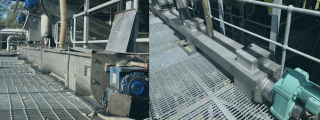
Sliding‑Frame Silos / Receival Bunkers use a hydraulically driven frame to keep material moving toward the extraction screw. The flat‑floor layout maximizes usable volume, especially where headroom is tight.
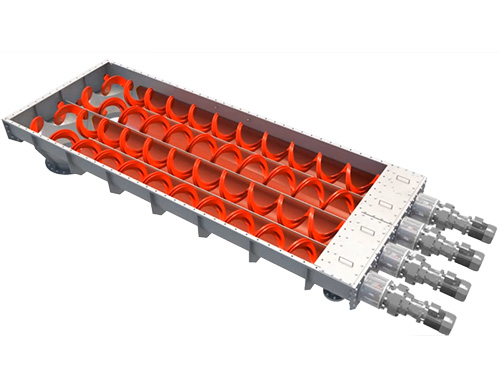
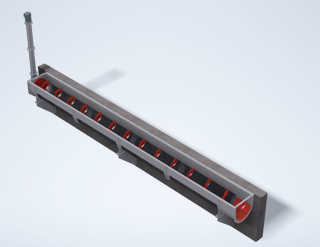
Live‑Bottom Silos / Hoppers employ multiple slow‑speed shaftless spirals to maintain continuous movement of cohesive sludges. Requires tapering of the silo floor to fit the live bottom geometry. It is optimized for difficult, high‑moisture materials.
Sliding‑Frame vs Live‑Bottom — At‑a‑Glance
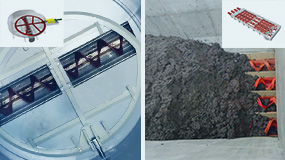
Use this comparison to select the right configuration for your sludge storage, and capacity needs.
|
|
Sliding‑Frame Silo |
Live‑Bottom Silo |
|---|---|---|
| Design Geometry | Works in round or rectangular shape | Best in rectangular form (round possible but uncommon) |
| Floor / Shell | Flat floor, no tapering | Tapered floor to accommodate live bottom |
| Capacity Fit | Large volumes; maximizes storage | Small–medium volumes; taper reduces total storage |
| Material Behaviour | Non‑free‑flowing / moderately sticky | Extremely sticky / cohesive / high‑moisture |
| Flow Mechanism | Hydraulic frame sweeps floor to break bridges | Multiple low‑RPM spirals provide continuous movement |
| Bridging Control | Good | Excellent |
| Maintenance Profile | Very low (few moving parts) | Low (more components, no hydraulics) |
| Energy Use | Low (slow‑speed, high‑torque) | Low (slow‑speed, high‑torque) |
| Cost Sweet Spot | More cost‑effective for larger silos | More cost‑effective for smaller silos |
| Site Constraints | Ideal with height restrictions and FIFO outloading |
Suited where taper is acceptable and sticky flow is critical |
| Typical Materials | Dewatered sludge; wood chips; non‑free‑ flowing solids |
Sticky sludge cake; severely cohesive materials prone to rat‑holing |
Why This Matters for Sustainability
Both configurations leverage slow‑speed, high‑torque drives to curb power demand, reduce intervention, and extend asset life—supporting safer operations and circular‑economy outcomes through reliable biosolids discharge.
Related news
- Asia Pacific News
- Europe News
- Industrial Solutions
- Municipal Solutions
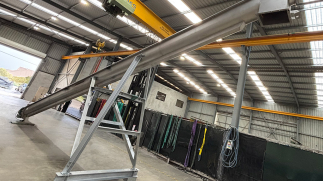
- Shaftless Spiral Conveyors
When solids handling equipment begins to show signs of wear, operators are often faced with a difficult decision: repair, replace, or continue operating at increased risk of unplanned downtime.
Building Resilient Wastewater and Stormwater Infrastructure
- Europe News
- Exhibitions & Meetings
14 May 2026 | Telford International Centre, UK | Booth G5
- Europe News
- Exhibitions & Meetings
We will be exhibiting at IFAT Munich, the world’s leading trade fair for environmental technologies, taking place from 4–7 May.
IFAT brings together industry professionals from across the global water, wastewater, and resource recovery sectors, providing a platform to showcase innovative solutions and exchange technical expertise.
- Asia Pacific News
- Europe News
- North America News
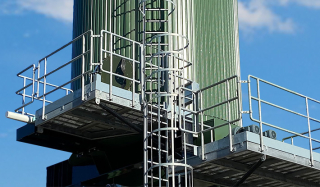
Operating costs in sludge storage and handling are driven by discharge reliability, minimal maintenance effort, and reduced operator involvement. Conventional sludge silos can struggle with sludge bridging, limited access for inspection, and material build‑up around the silo walls—often resulting in downtime, manual intervention, and increased operating costs.
- Europe News
- Exhibitions & Meetings
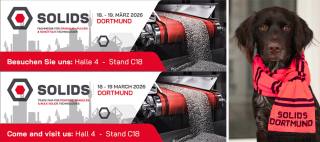
Die SOLIDS Dortmund findet am 18.–19. März 2026 in der Messehalle Dortmund statt und umfasst die Hallen 4–7. Erwartet werden über 340 Aussteller und mehr als 5.000 Fachbesucher.

- Asia Pacific News
- Europe News
- North America News
As we approach the festive season, it’s the perfect time to pause and reflect on the year that has passed. 2025 has been a year of growth, innovation, and collaboration, and we couldn’t have done it without the continued support of our clients, partners, and dedicated team members.
- Europe News
- Municipal Solutions
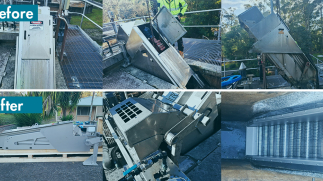
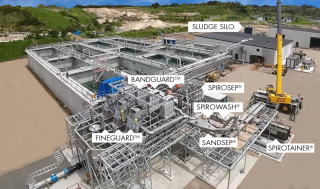
The Cambridge Wastewater Treatment Plant in New Zealand is undergoing a major upgrade to meet the needs of a growing population and stricter environmental standards.
- Europe News
- Municipal Solutions
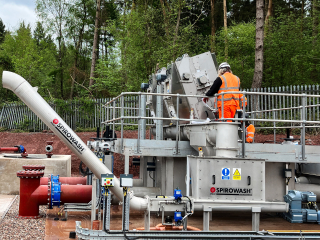
We were appointed to deliver the new inlet works package for the Loggerheads WWTP.
This comprised a new stainless-steel reception tank where the forwarded flows from Village TPS would be blended with the current Sanatorium flows before passing through inlet screens.
The inlet works package included:
- Europe News
- Exhibitions & Meetings
- Industrial Solutions
- Municipal Solutions
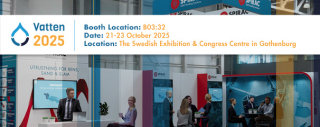
We’re excited to be part of Vatten 2025, taking place from 21–23 October 2025 at the Swedish Exhibition & Congress Centre in Gothenburg.
- 1
- 2
- 3
- 4
- 5
- 6
- 7
- 8
- 9
- nächste Seite ›
- letzte Seite »